
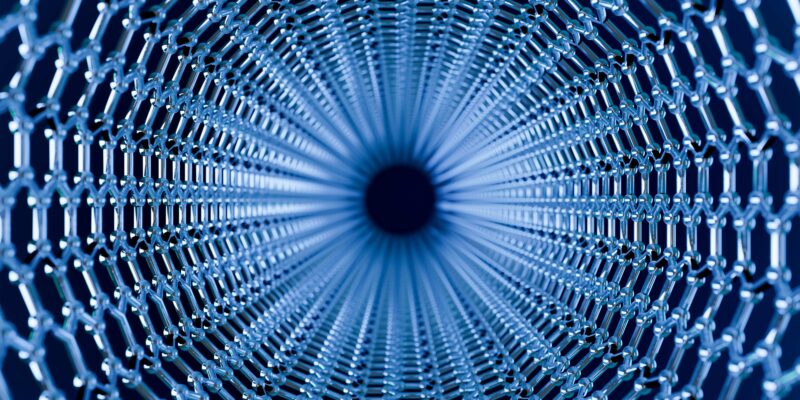
Is Graphene back?
Back in 2004, scientists at the University of Manchester produced the miracle material we’ve heard so much about ever since.
Unfortunately we have seen very little of it, because of the difficulties that came with it.
We use the phrase ‘miracle material’ in this blog a lot, but at first, graphene really did seem to be nothing short of a miracle. The properties it boasted were unlike anything that had ever been seen before.
Crucially, graphene promised to be multifunctional: thermal conductivity levels of around 5000 W/mK [1]; high electron mobility at room temperature; fantastic strength properties; large surface area (2630 m2/g)[3], the list goes on.
These properties meant that the applications for the material seemed endless. It could be used everywhere. There was only one ‘but‘: production.
Industrial-level production poses a massive issue for the graphene industry. Despite many companies taking on the challenge, very few have been able to harness and utilise these properties.
However – as outlined in a recent article published by the Guardian – there are impressive achievements across the UK that have come out of University projects & ‘spin-off’ start-ups.
One of these is Ben Jensen’s ‘blackest black’ or Vantablack, which harnessed graphene to create the darkest black in the world.
Made up of carbon nanotubes, the ‘blackest black’ is so named because it absorbs 99.96% of light.
Whilst novel and exciting, however, this new colour (or lack thereof) was a splash in the ocean of graphene’s promised achievements.
Now the Chief Executive of 2D Photonics, Jensen has remained firmly in the Graphene world, and may well be leading its ‘comeback’… (I’ll revisit this below).
Challenges in the world of Graphene

The biggest challenge for the Graphene world is the form in which to produce it.
Because of its 2D-planar structure, it has commonly been produced as ‘nanoribbons […] & quantum dots‘ for the semiconductor industry and hydrogels or foams for the energy sector.
We are yet to see particularly large-scale uptake of graphene products, with high production costs making this difficult in most cases.
Graphene-Based Composites
Focus has recently turned to the mechanical properties of graphene-based composites which have the potential to be produced in bulk and distributed.
The capacity to produce composites has meant that graphene’s properties can be used to enhance the performance of existing products.
Common types of graphene composites are used as coatings, strengtheners & conductors across many fields.
Concrete
The University of Manchester recently developed Concretene (read case study here) a ‘graphene-enhanced’ concrete.
This development is one of the first to provide a real-world or ‘everyday’ application of Graphene’s benefits.
By both increasing strength and decreasing the carbon emissions compared to regular concrete, Concretene has made significant strides towards realising goals for the net-zero transition within the construction industry.
At The Advanced Materials Show 2025, the Olmec team were able to hear from some of the leading minds in the Graphene world.
And… AI Data Centres
This may seem like a side-step, so bear with me.
AI Data centres have been the topic of much discussion in the recent years. Now that regular usage of AI has been rolled out globally, energy consumed by these data centres is more relevant than ever.
The vast levels of water and power required to power the centres is partly related to the performance of microchips used on site.
Graphene microchips developed by CamGraPhIC (led by Ben Jensen, creator of ‘Vantablack’) have increased performance speed and energy usage in comparison with leading silicone chips.
These graphene chips consume 80% less energy. Relying on Graphene’s fantastic thermal conductivity, they can also operate at higher temperatures than regular microchips.
This has the potential, much like Concretene, to transform existing processes and significantly reduce global carbon footprints.
While graphene’s journey has been slower than we thought it would be, its potential is clearly beginning to materialise in real-world applications that matter to us in the day-to-day.
—————————————————————-
For information on Olmec’s range of graphite and carbon products, please visit our products and industries section.